
AI Lab project

Rameses

AI support for the work behind the story

Rameses is an AI assistant built for media and journalism work. It researches topics, works with files and web tools, builds reports and dashboards, and hands longer assignments to background agents, giving journalists more time for the reporting only people can do.

Use it through

  • Dashboard
  • Voice commands
  • Discord
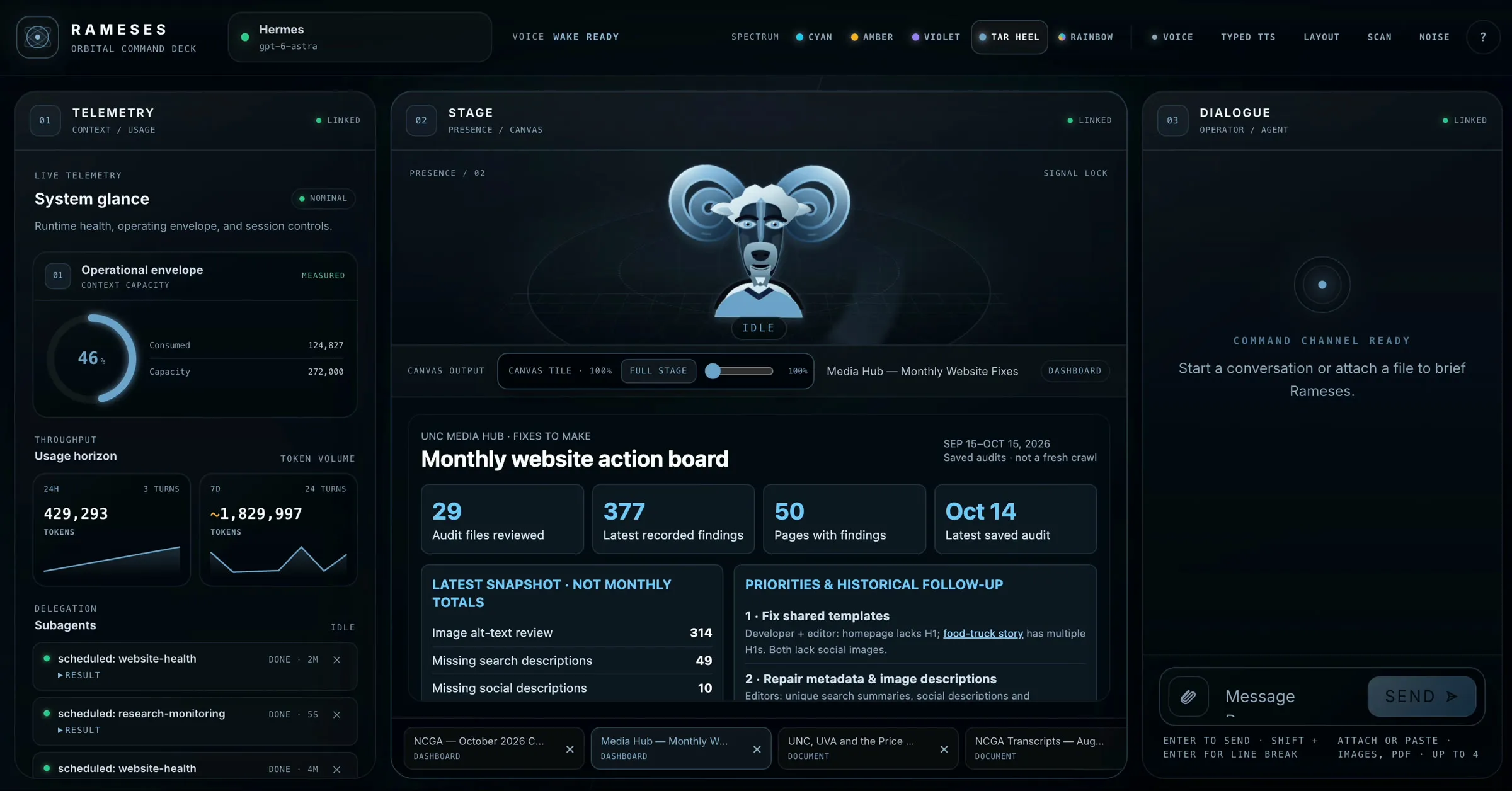
The Rameses dashboard: usage telemetry, a ram avatar, a monthly website action board for UNC Media Hub and a chat panel
The Rameses dashboard: usage and background tasks on the left, documents and dashboards on the canvas in the middle, and the conversation on the right.

Why we built Rameses

  • More time for reporting

    A lot of work happens before the first sentence is written: finding documents, reviewing records, organizing sources, checking facts and learning unfamiliar subjects. Rameses helps with that work, so journalists can spend more time on interviews, observation, verification and editorial judgment.

  • Knowledge that outlasts a semester

    Classes change, but useful procedures and lessons should carry forward. Rameses keeps a persistent workspace and memory, saves instructions and refines reusable skills from feedback, so what one assignment teaches is there for the next.

  • Practice directing AI

    Students learn how to direct AI, inspect its work, recognize its limits and decide when human reporting is essential.

How we use Rameses

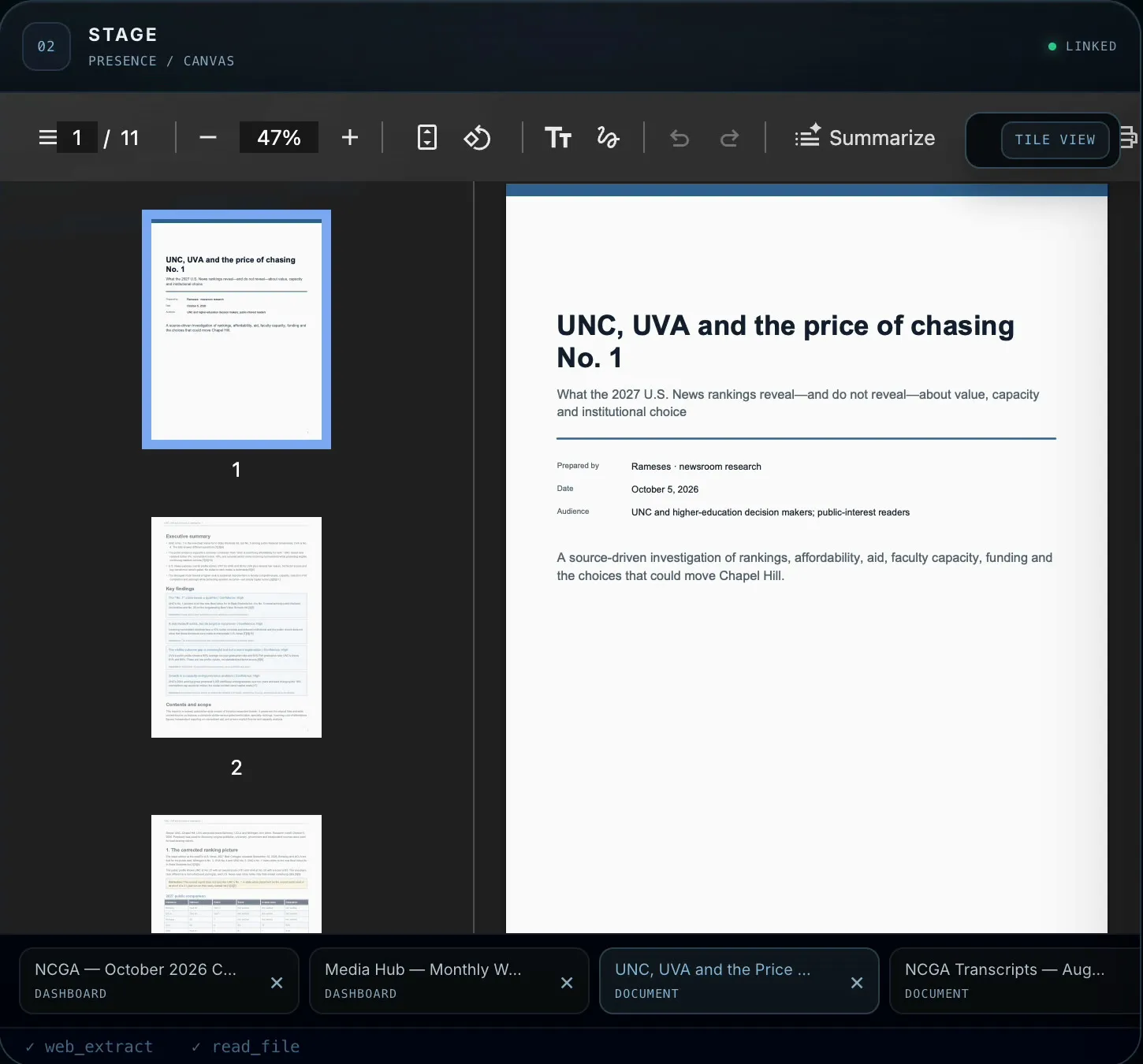
A Rameses research brief, "UNC, UVA and the price of chasing No. 1," open in the dashboard canvas with its page thumbnails

01

Building a foundation for reporting

Rameses helps students explore unfamiliar topics and assemble research briefs with source links, supporting evidence and questions for further reporting. Recent briefs have looked at university rankings and affordability, and whether Major League Baseball could expand to Raleigh. Each brief is a starting point: journalists check the claims, find the sources and do their own reporting.

  • 02

    Checking the health of UNC Media Hub

    UNC Media Hub brings student journalists together to produce stories for publication partners across North Carolina. Rameses checks its pages for broken links, missing metadata, image accessibility gaps and slow responses, then suggests fixes for editors and developers to review.

  • 03

    Preparing stories for publication

    Rameses turns supplied copy and supporting material into story previews and publication packages, with formatting, suggested metadata and image placements. It flags missing captions, credits and other details. We have also tested automated story uploads in a lab setting.

  • 04

    Making public records easier to search

    Rameses turns accessible official meeting recordings into searchable, timestamped machine transcripts, so journalists can go back to the original audio to verify a passage. It also researches agendas, minutes and other documents, and keeps those written records separate from spoken testimony.

Built around human judgment

Rameses supports the journalist's work. Journalists remain responsible for:

  • Verifying evidence
  • Checking quotations
  • Making editorial decisions
  • Deciding what is ready to publish

Source checks and adversarial review can help expose unsupported claims or missing information. They cannot guarantee accuracy: even different models can make the same mistake.

In shared classroom channels, students and instructors look at research activity together, discuss the results and give feedback on the process.

The technology behind Rameses

Rameses runs on Hermes, an open-source agent harness developed by Nous Research in collaboration with NVIDIA. Hermes connects language models with tools, persistent memory and reusable skills.

The Rameses dashboard brings that work into view through chat, voice, task activity and a canvas for documents, interactive dashboards and browser collaboration.

What's next

Each new workflow is another chance to test where AI can help journalists, and what people need to inspect before relying on its output. We're exploring:

  • Broader website monitoring
  • A growing archive of searchable public-meeting transcripts
  • Specialized models for classifying and analyzing campaign-finance records

Start a project with the AI Lab

Tell us what you are working on and we will get back to you.

Contact us